A public corporation, created by government for political purposes, and having subordinate and local powers of legislation; c. g., a coun- ty, town, city, etc. 2 Kent, Comm. 275. An incorporation of persons, inhabitants of a particular place, or connected with a particular district, enabling them to conduct its local civil government. Glov. Mun. Corp. 1. In English law. A body of persons in a towu having the powers of acting as one person, of holding and transmitting property, and of regulating the government of the town. Such corporations existed in the chief towns of England (as of other countries) from very early times, deriving their authority from “incorporating” charters granted by the crown. Wharton.
Related Library Documents:
Municipalities:Amazon Affiliate Products

Fruit from a Poisonous Tree
This book is a veritable powerhouse that shatters, in one instant, the wall of lies and deceit that took decades to build upon our impressionable minds. Stamper’s ability to explain complex legal and political information in a comprehensive yet concise manner is without equal. Like a master sculptor he has chipped away the ‘Words of Art and Deception’ to reveal the inescapable and undeniable Truth. This book has single-handedly bared the cleverly crafted schemes of a Power-lusting Elite.~ Paul Nash, DC, ND, CCN, ACU, Holistic Medicine, Minneapolis.
View Product
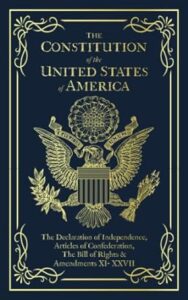
The Constitution of the United States of America
This book is a public collection of the four original documents in the founding of the United States of America and include, the Declaration of Independence, the Articles of Confederation, the Constitutions, and the Bill of Rights. Combined these documents are excellent primary historical sources for the American Revolution and the formation of the new republican state.
View Product