In a general sense an “indigent” person is one who is needy and poor, or one who has not sufficient property to furnish him a living nor any one able to support him and to whom he is entitled to look for support. See Storrs Agricultural School v. Whitney, 54 Conn. 342, 8 Atl. 141; Juneau County v. Wood County, 100 Wis. 330, 85 N. W. 387; City of Lynchburg v. Slaughter, 75 Va. G2. The laws of some of the states distinguish between “paupers” and “indigent persons,” the latter being persons who have no property or source of income sufficient for their support aside from their own labor, though self-supporting when able to work and in employment. See In reIlybart, 119 N. C. 359, 25 S. E. 903; People v. Schoharie County, 121 N. Y. 345, 24 N. E. 830; Rev. St Mo. 1899,
Related Library Documents:
Amazon Affiliate Products
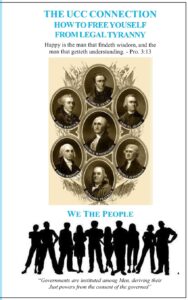
The UCC Connection
THE 10 MAXIMS OF COMMERCIAL LAW 1. A workman is worthy of his hire. 2. All are equal under the law. 3. In commerce, truth is sovereign. 4. Truth is expressed in the form of an affidavit. 5. An unrebutted affidavit stands as truth in commerce. 6. An unrebutted affidavit becomes judgment in commerce. 7. A matter must be expressed to be resolved. 8. He who leaves the field of battle first loses by default. 9. Sacrifice is the measure of credibility. 10. A lien or claim can be satisfied only through (a) rebuttal by counter affidavit point by point; (b) resolution by a jury; or (c) payment or performance of the claim.
View Product
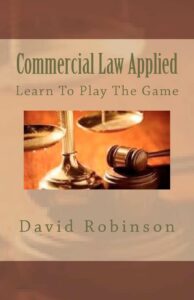
Commercial Law Applied
The principles, maxims and precepts of Commercial Law are eternal, unchanging and unchangeable. They are expressed in the Bible, both in the Old Testament and in the New. The law of commerce — unchanged for thousands of years — forms the underlying foundation of all law on this planet; and for governments around the world. It is the law of nations, and of everything that human civilization is built upon.
View Product

Fruit from a Poisonous Tree
This book is a veritable powerhouse that shatters, in one instant, the wall of lies and deceit that took decades to build upon our impressionable minds. Stamper’s ability to explain complex legal and political information in a comprehensive yet concise manner is without equal. Like a master sculptor he has chipped away the ‘Words of Art and Deception’ to reveal the inescapable and undeniable Truth. This book has single-handedly bared the cleverly crafted schemes of a Power-lusting Elite.~ Paul Nash, DC, ND, CCN, ACU, Holistic Medicine, Minneapolis.
View Product