This word has had various meanings at different stages of history. In the Roman law, it denoted one who was either born free or emancipated and was the opposite of “slave.” In feudal law, it designated an allodial proprietor, as distinguished from a vassal or feudal tenant. (And so in Pennsylvania colonial law. Fry’s Election Case,71 Pa. 308, 10 Am. Rep. 098.) In old English law, the word described a freeholder or tenant by free services; one who was not a villein. In modern legal phraseology, it is the appellation of a member of a city or borough having the right of suffrage, or a member of any municipal corporation invested with full civic rights. A person in the possession and enjoyment of all the civil and political rights accorded to the people under a free government.
Related Library Documents:
Amazon Affiliate Products
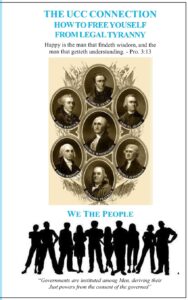
The UCC Connection
THE 10 MAXIMS OF COMMERCIAL LAW 1. A workman is worthy of his hire. 2. All are equal under the law. 3. In commerce, truth is sovereign. 4. Truth is expressed in the form of an affidavit. 5. An unrebutted affidavit stands as truth in commerce. 6. An unrebutted affidavit becomes judgment in commerce. 7. A matter must be expressed to be resolved. 8. He who leaves the field of battle first loses by default. 9. Sacrifice is the measure of credibility. 10. A lien or claim can be satisfied only through (a) rebuttal by counter affidavit point by point; (b) resolution by a jury; or (c) payment or performance of the claim.
View Product
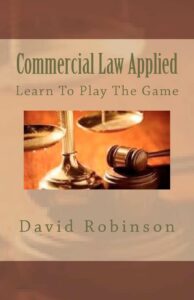
Commercial Law Applied
The principles, maxims and precepts of Commercial Law are eternal, unchanging and unchangeable. They are expressed in the Bible, both in the Old Testament and in the New. The law of commerce — unchanged for thousands of years — forms the underlying foundation of all law on this planet; and for governments around the world. It is the law of nations, and of everything that human civilization is built upon.
View Product
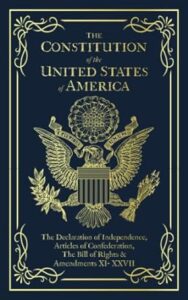
The Constitution of the United States of America
This book is a public collection of the four original documents in the founding of the United States of America and include, the Declaration of Independence, the Articles of Confederation, the Constitutions, and the Bill of Rights. Combined these documents are excellent primary historical sources for the American Revolution and the formation of the new republican state.
View Product