A deposit in the banking sense has been many times defined. It is the placing of money with the bank to be withdrawn upon the depositor’s demand or under rules and regulations agreed upon. (Black’s Law Dict.) “The deposit of money by a customer with his banker is one of loan, with a superadded obligation that the money is to be paid when demanded by a check.” ( Davis v. Elmira Savings Bank, 161 U.S. 275.) An ordinary bank deposit is made for the benefit of the depositor who loans his money to the banker “and the latter, in consideration of the loan of the money and the right to use it for his own profit, agrees to refund the same amount, or any part thereof, on demand.” ( Marine Bank v. Fulton Bank, 2 Wall. 252.) Money deposited becomes a part of the bank’s general funds and it contracts to pay its depositor’s checks. ( Baldwin’s Bank v. Smith, 215 N.Y. 76.) Money is deposited. Money is to be returned. ( Peoples Bank v. Legrand, 103 Penn. St. 309.). Gimbel Brothers, Inc., v. White
Related Library Documents:
Amazon Affiliate Products

Fruit from a Poisonous Tree
This book is a veritable powerhouse that shatters, in one instant, the wall of lies and deceit that took decades to build upon our impressionable minds. Stamper’s ability to explain complex legal and political information in a comprehensive yet concise manner is without equal. Like a master sculptor he has chipped away the ‘Words of Art and Deception’ to reveal the inescapable and undeniable Truth. This book has single-handedly bared the cleverly crafted schemes of a Power-lusting Elite.~ Paul Nash, DC, ND, CCN, ACU, Holistic Medicine, Minneapolis.
View Product
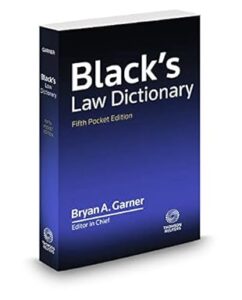
Black’s Law Dictionary
Black’s Law Dictionary, Pocket Edition is the top-selling paperback law dictionary for good reason. With more than 19,000 definitions from the industry-standard Black’s Law Dictionary 10th, it is an essential reference tool for legal terms in a compact format.
View Product
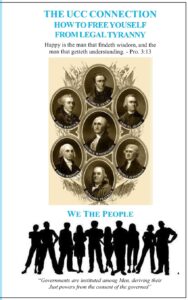
The UCC Connection
THE 10 MAXIMS OF COMMERCIAL LAW 1. A workman is worthy of his hire. 2. All are equal under the law. 3. In commerce, truth is sovereign. 4. Truth is expressed in the form of an affidavit. 5. An unrebutted affidavit stands as truth in commerce. 6. An unrebutted affidavit becomes judgment in commerce. 7. A matter must be expressed to be resolved. 8. He who leaves the field of battle first loses by default. 9. Sacrifice is the measure of credibility. 10. A lien or claim can be satisfied only through (a) rebuttal by counter affidavit point by point; (b) resolution by a jury; or (c) payment or performance of the claim.
View Product