Officers authorized to preserve and maintain the public peace. In England, these officers were locally elected by the people until the reign of Edward III. when their appointment was vested in the king. Their duties were to prevent and arrest for breaches of the peace, but they had no power to arraign and try the offender until about 1300. when this authority was given to them by act of parliament, and “then they acquired the more honorable appellation of justices of the peace.” 1 Bl. Comm. 351. Even after this time, however, many public officers were styled “conservators of the peace,” not as a distinct office but by virtue of the duties and authorities pertaining to their offices. In this sense the term may include the king himself, the lord chancellor, justices of the king’s bench, master of the rolls, coroners, sheriffs, constables, etc. 1 Bl. Comm. 350. See Smith v. Abbott. 17 N. J. Law, 358. The tenn is still in use in Texas, where the constitution provides that county judges shall be conservators of the peace. Const. Tex. art. 4,
Related Library Documents:
Amazon Affiliate Products
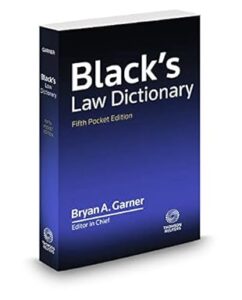
Black’s Law Dictionary
Black’s Law Dictionary, Pocket Edition is the top-selling paperback law dictionary for good reason. With more than 19,000 definitions from the industry-standard Black’s Law Dictionary 10th, it is an essential reference tool for legal terms in a compact format.
View Product
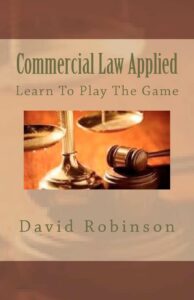
Commercial Law Applied
The principles, maxims and precepts of Commercial Law are eternal, unchanging and unchangeable. They are expressed in the Bible, both in the Old Testament and in the New. The law of commerce — unchanged for thousands of years — forms the underlying foundation of all law on this planet; and for governments around the world. It is the law of nations, and of everything that human civilization is built upon.
View Product
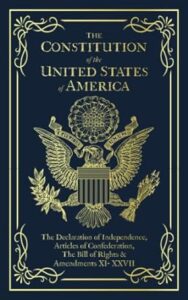
The Constitution of the United States of America
This book is a public collection of the four original documents in the founding of the United States of America and include, the Declaration of Independence, the Articles of Confederation, the Constitutions, and the Bill of Rights. Combined these documents are excellent primary historical sources for the American Revolution and the formation of the new republican state.
View Product