A written assurance, or official representation, that some act has or has not been done, or some event occurred, or some legal formality been complied with. Particularly, such written assurance made or issuing from some court, and designed as a notice of things done therein, or as a warrant or authority, to some other court, judge, or officer. People v. Foster, 27 Misc. Rep. 576, 58 N. Y. Supp. 574; U. S. v. Ambrose, 108 U. S. 336, 2 Sup. Ct. 6S2, 27 L. Ed. 746; Ti- conic Bank v. Stackpole, 41 Me. 305. A document in use in the English custom house. No goods can be exported by certificate, except foreign goods formerly imported, on which the whole or a part of the customs paid on importation is to be drawn back. Wharton
Related Library Documents:
Amazon Affiliate Products
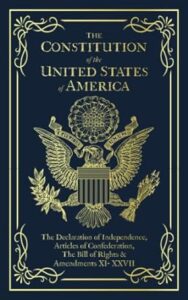
The Constitution of the United States of America
This book is a public collection of the four original documents in the founding of the United States of America and include, the Declaration of Independence, the Articles of Confederation, the Constitutions, and the Bill of Rights. Combined these documents are excellent primary historical sources for the American Revolution and the formation of the new republican state.
The Declaration of Independence, The Bill of Rights
This book is a public collection of the four original documents in the founding of the United States of America and include, the Declaration of Independence, the Articles of Confederation, the Constitutions, and the Bill of Rights. Combined these documents are excellent primary historical sources for the American Revolution and the formation of the new republican state.
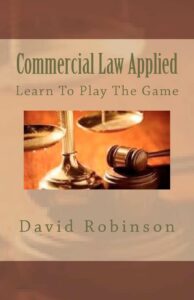
The principles, maxims and precepts of Commercial Law are eternal, unchanging and unchangeable. They are expressed in the Bible, both in the Old Testament and in the New. The law of commerce — unchanged for thousands of years — forms the underlying foundation of all law on this planet; and for governments around the world. It is the law of nations, and of everything that human civilization is built upon.
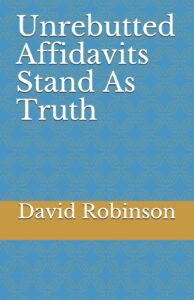
THE 10 MAXIMS OF COMMERCIAL LAW 1. A workman is worthy of his hire. 2. All are equal under the law. 3. In commerce, truth is sovereign. 4. Truth is expressed in the form of an affidavit. 5. An unrebutted affidavit stands as truth in commerce. 6. An unrebutted affidavit becomes judgment in commerce. 7. A matter must be expressed to be resolved. 8. He who leaves the field of battle first loses by default. 9. Sacrifice is the measure of credibility. 10. A lien or claim can be satisfied only through (a) rebuttal by counter affidavit point by point; (b) resolution by a jury; or (c) payment or performance of the claim.