A court exercising jurisdiction over maritime causes, both civil and criminal, and marine affairs, commerce and navigation, controversies arising out of acts done upon or relating to the sea, and over questions of prize. Also, the system of jurisprudence relating to and growing out of the jurisdiction and practice of the admiralty courts. In English law. The executive department of state which presides over the naval forces of the kingdom. The normal head is the lord high admiral, but in practice the functions of the great office are discharged by several commissioners, of whom one is the chief, and is called the “First Lord.” He is assisted by other lords and by various secretaries. Also the court of the admiral. The building where the lords of the admiralty transact business. In American law. A tribunal exercising jurisdiction over all maritime contracts, torts, injuries, or offenses. 2 Pars. Mar. Law, 008; New England Marine Ins. Co. v. Dunham, 11 Wall. 1, 23, 20 L. Ed. 90; De Lovio v. Boit, 2 Call. 398, Fed. Cas. No. 3,77(5; The Belfast v. Boon. 7 Wall. 024, 19 L. Ed. 200; Ex parte Eastou, 95 U. S. 08, 72, 24 L. Ed. 373.
Related Library Documents:
Amazon Affiliate Products
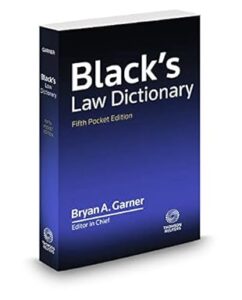
Black’s Law Dictionary
Black’s Law Dictionary, Pocket Edition is the top-selling paperback law dictionary for good reason. With more than 19,000 definitions from the industry-standard Black’s Law Dictionary 10th, it is an essential reference tool for legal terms in a compact format.
View Product
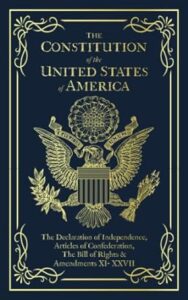
The Constitution of the United States of America
This book is a public collection of the four original documents in the founding of the United States of America and include, the Declaration of Independence, the Articles of Confederation, the Constitutions, and the Bill of Rights. Combined these documents are excellent primary historical sources for the American Revolution and the formation of the new republican state.
View Product

Fruit from a Poisonous Tree
This book is a veritable powerhouse that shatters, in one instant, the wall of lies and deceit that took decades to build upon our impressionable minds. Stamper’s ability to explain complex legal and political information in a comprehensive yet concise manner is without equal. Like a master sculptor he has chipped away the ‘Words of Art and Deception’ to reveal the inescapable and undeniable Truth. This book has single-handedly bared the cleverly crafted schemes of a Power-lusting Elite.~ Paul Nash, DC, ND, CCN, ACU, Holistic Medicine, Minneapolis.
View Product