The Federal Reserve System is the central banking system of the United States. It was created on December 23, 1913, with the enactment of the Federal Reserve Act, after a series of financial panics led to the desire for central control of the monetary system in order to alleviate financial crises.
“The Federal Reserve Banks are not part of the government itself, but rather are ‘independent, privately owned and locally controlled corporations.'” Fasano v. Federal Reserve Bank of New York (2006)
“The Federal Reserve System is considered to be an independent central bank.” – Federal Reserve Bank of San Francisco
“The stockholders in the 12 regional Federal Reserve Banks are the privately owned banks that fall under the Federal Reserve System. Employees are not civil service.” – The Federal Reserve Bank of Atlanta
“The Federal Reserve System doesn’t require public funding. Member banks hold stock in the Federal Reserve Banks and earn dividends.”
The principles, maxims and precepts of Commercial Law are eternal, unchanging and unchangeable. They are expressed in the Bible, both in the Old Testament and in the New. The law of commerce — unchanged for thousands of years — forms the underlying foundation of all law on this planet; and for governments around the world. It is the law of nations, and of everything that human civilization is built upon.
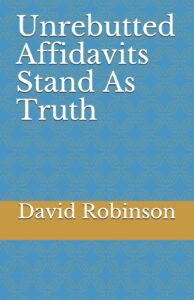
THE 10 MAXIMS OF COMMERCIAL LAW 1. A workman is worthy of his hire. 2. All are equal under the law. 3. In commerce, truth is sovereign. 4. Truth is expressed in the form of an affidavit. 5. An unrebutted affidavit stands as truth in commerce. 6. An unrebutted affidavit becomes judgment in commerce. 7. A matter must be expressed to be resolved. 8. He who leaves the field of battle first loses by default. 9. Sacrifice is the measure of credibility. 10. A lien or claim can be satisfied only through (a) rebuttal by counter affidavit point by point; (b) resolution by a jury; or (c) payment or performance of the claim.
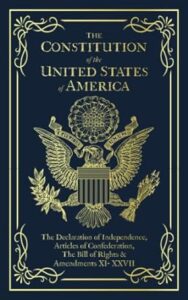
This book is a public collection of the four original documents in the founding of the United States of America and include, the Declaration of Independence, the Articles of Confederation, the Constitutions, and the Bill of Rights. Combined these documents are excellent primary historical sources for the American Revolution and the formation of the new republican state.
The Declaration of Independence, The Bill of Rights
This book is a public collection of the four original documents in the founding of the United States of America and include, the Declaration of Independence, the Articles of Confederation, the Constitutions, and the Bill of Rights. Combined these documents are excellent primary historical sources for the American Revolution and the formation of the new republican state.